BATCHELOR LAB
Research

Batchelor Lab

Research

Research

Research programmes

Four complementary programmes explore how signalling dynamics encode function at molecular, promoter and cell‑fate levels.
01

p53 dynamics and encoding

How do amplitude, duration and frequency of p53 activity encode specific transcriptional programmes and cell fates?

We use live single‑cell imaging of fluorescent p53 reporters combined with promoter-reporter constructs and quantitative modelling to map how different dynamic modes of p53 map to distinct downstream transcriptional programmes. Earlier work established stimulus-dependent modes — fixed pulses to double‑strand breaks and single graded pulses after UV — and our group extends this to mechanistic decoding at the promoter level.

Our experiments pair pulse-manipulation (small-molecule modulators, timed stimuli) with single‑cell transcriptional readouts and model-based inference to determine which dynamic features are read by specific promoters. The aim is to reveal how cells use temporal coding to diversify responses and to identify interventions that reprogramme fate decisions in damaged or cancerous cells.
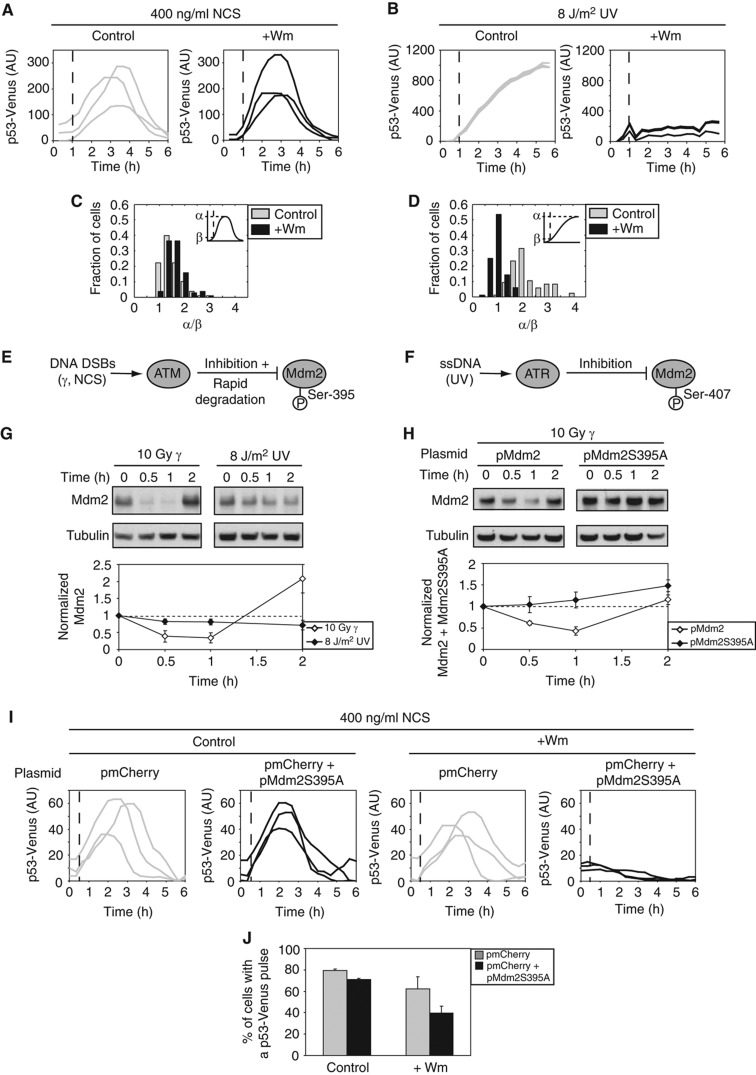
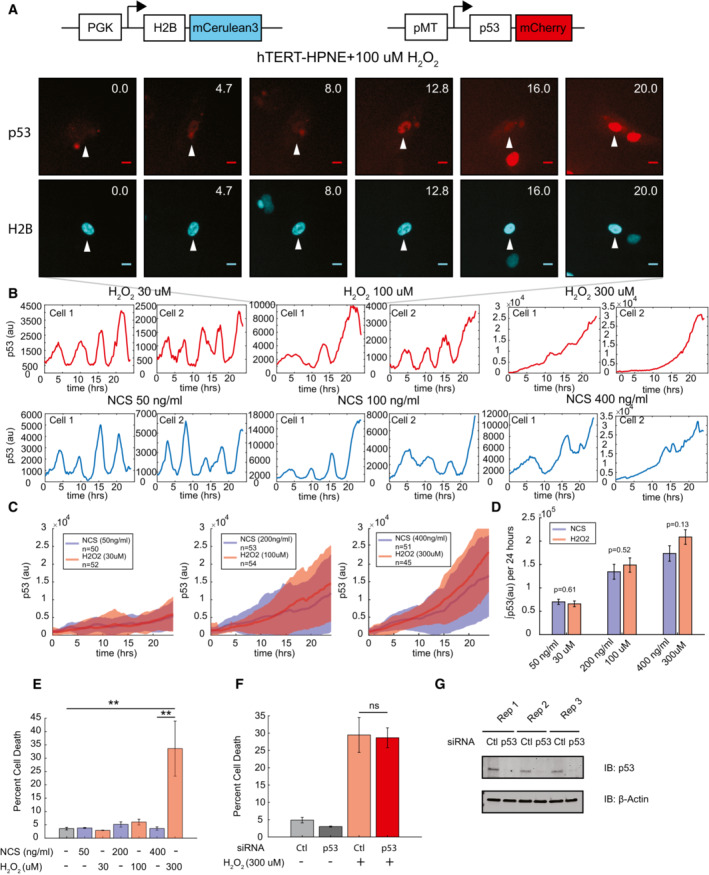
Representative single-cell p53 traces and promoter responses (from Batchelor et al., Mol Syst Biol 2011; Hanson et al., J Cell Biol 2019).
02

DNA-damage response and cell fate

Mechanistic links between DNA-damage sensing, p53 dynamics and outcomes: arrest, repair, senescence or cell death.

We probe how different forms and doses of DNA damage (double‑strand breaks, UV, topoisomerase‑induced lesions) generate distinct upstream signalling that sculpts p53 dynamics. Using kinase inhibitors, DNA‑damage mimetics and gene perturbations, we connect molecular events at the damage-sensing level to the dynamic behaviour of p53 and downstream effectors.

By combining single‑cell fate-tracking and transcriptomics with mechanistic models, we seek to identify kinetic bottlenecks and network motifs that determine whether a cell repairs and returns to cycle or undergoes permanent arrest or apoptosis. This knowledge can reveal vulnerabilities in cancer cells that can be exploited by temporally targeted therapies.

Examples of stimulus‑dependent p53 responses to double‑strand breaks and UV (source: Batchelor et al., Mol Syst Biol 2011; Hanson & Batchelor, Mol Syst Biol 2022).
03

Cell-cycle arrest versus apoptosis

How dynamic features of stress signalling determine whether cells arrest and repair or activate apoptotic programmes.

We examine promoter- and protein‑level mechanisms that distinguish cell‑cycle arrest programmes from apoptotic activation downstream of p53 dynamics. Using engineered reporters, measurements of mRNA and protein stability, and targeted perturbations, we test how filtering properties of promoters and protein decay shape outcome.

Computational models and experimental phase‑resetting experiments (timed stimuli) allow us to test whether altering pulse timing or frequency can bias cell populations towards survival or death. The work connects dynamic control at the signalling level to functional outcomes important for cancer therapy design.

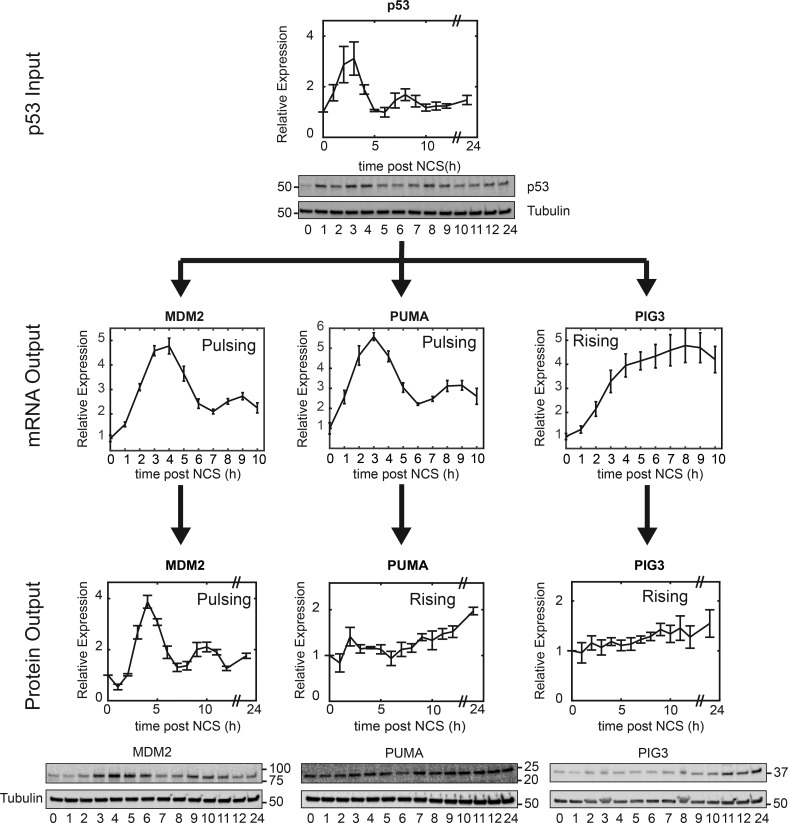
Filtering of p53 pulses by target-gene stability and effects on fate decisions (Hanson et al., J Cell Biol 2019; Venkatachalpathy et al., Mol Syst Biol 2025).
04

Signalling crosstalk: MYC and MAPK interactions

How interactions between p53, MYC and MAPK networks influence dynamic behaviour and fate selection.

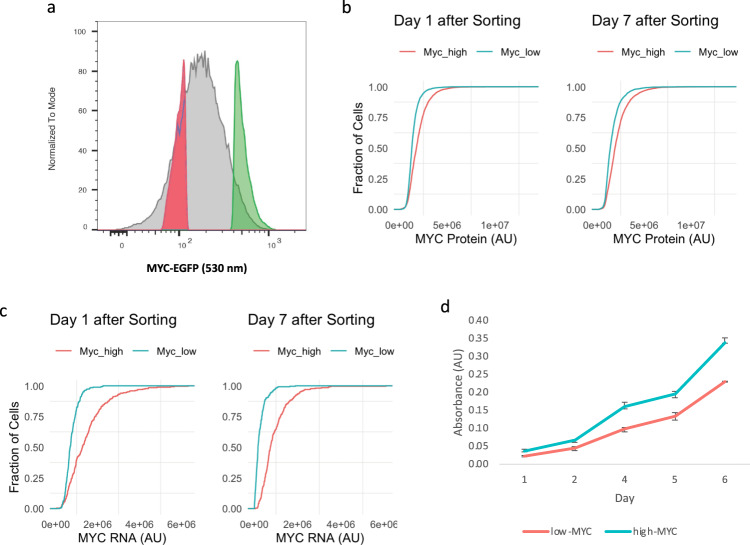
We study crosstalk between p53 and other major regulators of proliferation and stress response, notably MYC and MAPK. By measuring dynamics of multiple reporters simultaneously in single cells, we quantify how activity in one pathway modifies the dynamics, transcriptional output and function of another.

This programme includes experiments that perturb MYC activity and MAPK signalling while monitoring p53, together with models that capture inter‑pathway coupling. The objective is to understand network-level rules that allow cells to prioritise repair, resume proliferation, or enter protective quiescence/senescence under differing stress contexts.

Simultaneous readouts of p53 and MAPK reporters and coordinated dynamics during DNA damage (Hanson & Batchelor, Mol Syst Biol 2022).